
Western blotting is one of the most widely used techniques in protein analysis, enabling researchers to detect, quantify, and study proteins of interest. While the primary antibody is responsible for binding specifically to the target protein, the secondary antibody plays an equally important role in visualization and signal amplification. Choosing the wrong secondary antibody can lead to weak signals, high background, or misleading results.
This article will walk you through the key factors to consider when selecting the right secondary antibody for your Western blot experiments, ensuring reliable and reproducible outcomes.
Why Secondary Antibodies Matter in Western Blot
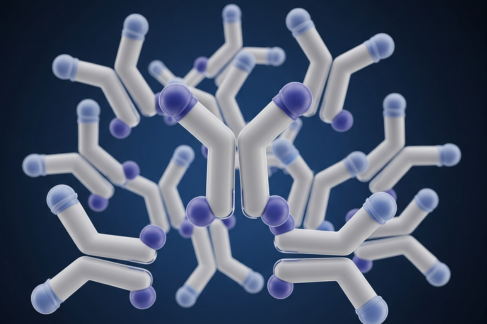
Secondary antibodies recognize and bind to the primary antibody used in the assay. They are typically conjugated to an enzyme (such as horseradish peroxidase, HRP, or alkaline phosphatase, AP) or a fluorescent dye that allows for signal detection. The main advantages of using a secondary antibody in Western Blot include:
Signal amplification: Multiple secondary antibodies can bind to a single primary antibody, increasing sensitivity.
Versatility: A single secondary antibody can be used with many different primary antibodies of the same host species.
Cost-effectiveness: Researchers can purchase a few high-quality secondary antibodies instead of multiple directly labeled primaries.
Given their critical role, selecting the right secondary antibody can significantly affect your Western blot’s clarity and accuracy.
Key Factors to Consider When Choosing Secondary Antibodies
a) Host Species of the Primary Antibody
The first step is to match the secondary antibody to the species in which the primary antibody was raised. For example:
If your primary antibody was generated in a rabbit, you should use an anti-rabbit secondary antibody.
For a mouse primary antibody, an anti-mouse secondary is required.
Failing to match species will result in no signal detection.
b) Antibody Subclass Specificity
Some primary antibodies belong to specific subclasses (e.g., mouse IgG1, IgG2a). If you’re working with a monoclonal antibody, it may be advantageous to use a secondary antibody that is subclass-specific. This prevents cross-reactivity and ensures maximum specificity.
c) Conjugation Type (Detection Method)
The conjugate attached to the secondary antibody determines how the protein will be visualized:
HRP (Horseradish Peroxidase): Most common; works with chemiluminescent substrates for highly sensitive detection.
AP (Alkaline Phosphatase): Useful for longer-lasting signals, particularly when HRP substrates are too transient.
Fluorescent Dyes (e.g., Alexa Fluor, FITC, DyLight): Enable multiplex detection and direct imaging.
Biotin: Can be used with streptavidin conjugates for additional amplification, though it is less common in Western blotting today.
Choose based on your lab’s imaging equipment and experimental needs.
d) Cross-Adsorbed vs. Non-Cross-Adsorbed Secondary Antibodies
Cross-adsorbed secondary antibodies are purified to reduce cross-reactivity with other species. This is especially important if you are:
Using multiple primary antibodies from different species.
Working with complex biological samples containing immunoglobulins from multiple species.
Non-cross-adsorbed secondaries are more general but may bind non-specifically, leading to background bands.
e) Monoclonal vs. Polyclonal Secondary Antibodies
Polyclonal secondaries: Recognize multiple epitopes on the primary antibody, providing stronger signals due to amplification.
Monoclonal secondaries: Recognize a single epitope, offering higher specificity but sometimes weaker signals.
Most Western blotting applications favor polyclonal secondary antibodies for robust detection.
f) Dilution and Concentration
Each secondary antibody has an optimal working dilution. Using too high a concentration can increase background noise, while too low a concentration can weaken the signal. Always check the manufacturer’s datasheet for recommended dilution ranges and optimize for your own system.
Best Practices for Using Secondary Antibodies
Always validate: Test secondary antibodies with known positive and negative controls before relying on results.
Store properly: Keep antibodies at the recommended temperature and avoid repeated freeze-thaw cycles.
Use consistent blocking agents: Stick to the same blocking agent across experiments to maintain reproducibility.
Document lot numbers: Even validated antibodies can vary slightly between lots; recording details ensures reproducibility.
Conclusion
Selecting the right secondary antibody for Western blotting is essential to achieving accurate and reproducible results. Key factors such as the host species of the primary antibody, conjugation type, subclass specificity, and cross-adsorption should guide your decision. Proper antibody choice not only enhances sensitivity but also reduces background, ensuring clear and interpretable blots.
For researchers looking for reliable, high-quality secondary antibodies, AAA Biotech offers a wide range of validated products designed specifically for Western blotting. Their carefully developed secondary antibodies ensure strong signals, low background, and consistent performance, making them a trusted partner for your research needs. For more information, visit the site.







Write a comment ...